

Pali language : ค้นหาหนังสือธรรมะ หน้า 3 / 4
หน้าหนังสือทั้งหมด
103
The Essence of Meditation and the Four Jhanas
Suzanne Jeffrey
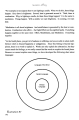
"For example, let us suppose that we are lighting a candle. When we do this, three things happen: first, there is brightness. Second, heat is generated around it. Third, there is comb
In meditation, similar to lighting a candle, three phenomena occur: brightness, heat (effort), and combustion (mindfulness). The fourth jhana transcends happiness and unhappiness, leading to a profoun
104
Understanding the Mind and Human Existence
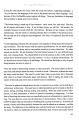
Luang Por then draws the circle within the circle that follows, regarding languages…
“As you can see, the language of the mind is far greater than any other language. And, because of this, the Buddha
Luang Por discusses the concept of the mind as a profound element that transcends language limitations. He explains how the human body, consisting of the four elements—earth, water, fire, and wind—is

59
Publications and Media of the Dhammakaya Foundation
PUBLICATIONS AND MEDIA
As the demand for teachings on the culture for inner peace becomes broader, the need for academic resources for study of the culture, especially media resources has become grea
The Dhammakaya Foundation has recognized the growing demand for academic resources on inner peace culture. Committed to producing teaching materials including books and multivision presentations, they
91
โครงการบรรพชาอุปสมบทหมู่ธรรมทายาทนานาชาติ
โครงการบรรพชาอุปสมบทหมู่ธรรมทายาทนานาชาติ
Apply Now: www.ordinationthai.org
1. IDOP WINTER ( English Language )
Training Period : 7 February - 6 March 2016
อบรมระหว่างวันที่ ๗ กุมภาพันธ์ - 5 มีนาคม พ.
โครงการบรรพชาอุปสมบทหมู่ธรรมทายาทนานาชาติ Apply Now: www.ordinationthai.org 1. IDOP WINTER ( English Language ) Training Period : 7 February - 6 March 2016 อบรมระหว่างวันที่ ๗ กุมภาพันธ์ - 5 มีนาคม พ.

91
โครงการบรรพชาอุปสมบทหมู่
ฉบับยุโรป EU
โครงการบรรพชาอุปสมบทหมู่ธรรมทายาทนานาชาติ
Apply Now: www.ordinationthai.org
1. IDOP WINTER ( English Language )
Training Period : 7 February - 6 March 2016
อบรมระหว่างวันที่ ๗ กุมภาพันธ์
ฉบับยุโรป EU โครงการบรรพชาอุปสมบทหมู่ธรรมทายาทนานาชาติ Apply Now: www.ordinationthai.org 1. IDOP WINTER ( English Language ) Training Period : 7 February - 6 March 2016 อบรมระหว่างวันที่ ๗ กุมภาพันธ์

91
โครงการบรรพชาอุปสมบทหมู่
อยู่ในบุญฉบับ USA
โครงการบรรพชาอุปสมบทหมู่ธรรมทายาทนานาชาติ
Apply Now: www.ordinationthai.org
1. IDOP WINTER (English Language)
Training Period : 7 February - 6 March 2016
อบรมระหว่างวันที่ ๗ กุมภาพัน
อยู่ในบุญฉบับ USA โครงการบรรพชาอุปสมบทหมู่ธรรมทายาทนานาชาติ Apply Now: www.ordinationthai.org 1. IDOP WINTER (English Language) Training Period : 7 February - 6 March 2016 อบรมระหว่างวันที่ ๗ กุมภาพัน
165
Exploring Concepts in Buddhism and Mindfulness
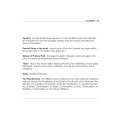
…it: another ancient language used in India; Buddhist scriptures in Sanskrit are translated from the Pali language; Sanskrit texts are used by the Mahayana school of Buddhism.
Seventh Base of the mind: natural hom…
This text delves into the significance of Sanskrit as an ancient language in India and its relation to Buddhist texts, particularly those influenced by the Mahayana school. It introduces the Seventh B

126
Training and Educational Policies at Wat Phra Dhammakaya
…ed in 1985 allowing monks, novices and interested laypeople to learn both Buddhist doctrine and the Pali language. At present, there have been a total of 5,890 graduates, including monks and interested laypeople. …
…ished The School of Buddhist Doctrine in 1985, promoting comprehensive study of Buddhist theory and Pali language among monks, novices, and laypeople, contributing to the formation of 5,890 graduates. This initiat…
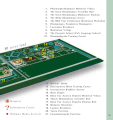
161
Exploring the Dhammakaya Temple Complex
…makaya Foundation Headquarters
7. Laywomen Residence
8. Meditation Village
9. The Pariyatti School (Pali Language School)
10. Dhammadayada Training Centre
11. Novices' abode
12. Kalyanamitta Monk Training Centre
1…
…c environment for learning and practice. Educational institutions like the Pariyatti School provide Pali language instruction, while various pavilions and dining halls support a communal lifestyle focused on Dharm…

58
การศึกษาภาษา pali และการปฏิบัติธรรม
Moreover, Nicholas studied Pāli
Language informally with a group of his
friends for nearly a year, including some
aspects of Phra Abhidhamma study in
England.
MEDITATION LEADS TO BUDDHIST
FAITH
Nichol
Moreover, Nicholas studied Pāli Language informally with a group of his friends for nearly a year, including some aspects of Phra Abhidhamma study in England. MEDITATION LEADS TO BUDDHIST FAITH Nichol

77
การเผยแผ่พระพุทธศาสนาและการพิมพ์ในสมัยรัชกาลที่ 3
ทั้งยังทรงเผยแผ่พระสัทธรรมแห่งองค์พระบรมศาสดาให้ไปงอกงามยังดินแดนอื่น ดังปรากฏ
หลักฐานในหนังสือ “The Status of Pali in Cambodia : from Canonical to Esoteric Language”
โดย Olivier de Bernon ว่า ในปี พ.
ทั้งยังทรงเผยแผ่พระสัทธรรมแห่งองค์พระบรมศาสดาให้ไปงอกงามยังดินแดนอื่น ดังปรากฏ หลักฐานในหนังสือ “The Status of Pali in Cambodia : from Canonical to Esoteric Language” โดย Olivier de Bernon ว่า ในปี พ.

77
การเผยแผ่พระพุทธศาสนาในต่างแดน
ทั้งยังทรงเผยแผ่พระสัทธรรมแห่งองค์พระบรมศาสดาให้ไปงอกงามยังดินแดนอื่น ดังปรากฏ
หลักฐานในหนังสือ “The Statusof Pali in Cambodia : from Canonical to Esoteric Language
โดย Olivier de Bernon ว่า ในปี พ.ศ.
ทั้งยังทรงเผยแผ่พระสัทธรรมแห่งองค์พระบรมศาสดาให้ไปงอกงามยังดินแดนอื่น ดังปรากฏ หลักฐานในหนังสือ “The Statusof Pali in Cambodia : from Canonical to Esoteric Language โดย Olivier de Bernon ว่า ในปี พ.ศ.

45
The Birth of a Meritorious Person
…ly. This implies that the
unborn child, in its previous existence always made Dana
(donation in the Pali language). The baby's presence influences
her to offer alms herself. For a person who loved to chant in a
pr…
…ly. This implies that the unborn child, in its previous existence always made Dana (donation in the Pali language). The baby's presence influences her to offer alms herself. For a person who loved to chant in a pr…

166
ความสำคัญของการให้พร
What is a blessing?
Blessing is called vara in the Pali language.
The meaning of vara is progress and happiness.
A blessing means the act of giving the very best.
T…
What is a blessing? Blessing is called vara in the Pali language. The meaning of vara is progress and happiness. A blessing means the act of giving the very best. T…

186
ความสำคัญของความสะอาดในวัด
…They don't
ask, "Where can I find the abbot?" or "Where can I meet the
monk who is an expert in the Pali language?" For this reason,
it is important to keep the restrooms and other temple facilities
spotless. As a…
…They don't ask, "Where can I find the abbot?" or "Where can I meet the monk who is an expert in the Pali language?" For this reason, it is important to keep the restrooms and other temple facilities spotless. As a…
97
Preservation of Palm-Leaf Scriptures in Dai Buddhism
donate palm-leaf scriptures as an act of merit and such donations
appear less frequently in the sacred dantam (贽坦) or offering
ceremony. Donors prefer to donate Buddhist scriptures printed
using mod
This text discusses the decline in donations of traditional palm-leaf scriptures in favor of more accessible and readable texts printed on Chinese and sa-paper. Reasons include cost, legibility, and t
4
จักรึกสาแปลเดิมอัปลิมยำนนะ: จารึกอรรถกถากอภิวัฒน์ในประเทศไทย
จักรึกสาแปลเดิมอัปลิมยำนนะ: จารึกอรรถกถากอภิวัฒน์ในประเทศไทย
Octagonal Pillar Inscription from Chainat: the Oldest Inscription Recording Abhidhamma Attakathā Text in Thailand
57
U-tain WONGSATHIT
Ab
บทความนี้ศึกษาการอ่านและแปลจารึกเสาหมายเลขแปดเหลี่ยมจากจังหวัดชัยนาท ซึ่งเป็นจารึกจากอาณาจักรทวารวดี เขียนด้วยอักษรปัลลวะในช่วงศตวรรษที่ 6-7 ตามพื้นฐานของโบราณคดี เนื้อหาภายในจารึกเป็นภาษาพาลี โดยเฉพา
8
Understanding Boonya and Kilesa in Buddhist Teachings
out how to remove it. We are trying to make this book as
neutral as possible, because when one comes to understand
the reality of these teachings and their applicability, you
will find that they are n
This text delves into the Pali Sanskrit terms Boonya and Kilesa, emphasizing their importance in Buddhist teachings. Boonya, described as self-generating pure energy, is crucial for understanding meri
33
Reinterpreting Dhammarāya in the Pali Canon
Most of them refer only to the Aggañña-sutta passage, 4 missing out the three Apadāna references. 5 The reason could be either that the scholars concerned have taken the aforementioned text as represe
This paper examines the overlooked references to dhammarāya in the Pali canon, emphasizing a context not previously presented. It critiques the tendency to categorize texts strictly as ‘early Buddhism
37
Exploring the Concept of Dhammakāya in the Aggañña-sutta
IV. Reference 1: Dhammakāya as the Tathāgata’s Designation
The first Pali reference to the term dhammakāya that is well known to all previous works is a passage in the Aggañña-sutta, wherein the term
This text discusses the term 'dhammakāya' as referenced in the Aggañña-sutta, emphasizing its importance in defining an heir of dhamma and the Tathāgata’s true son. The conversation between the Buddha